Meat & Poultry Processing
 In the Food industry, processing of meats and poultry requires heat and significant amounts of hot water for many of the process and cleaning applications throughout the plant.
- Meat producers use a combination of scalding and de-hairing to prepare for evisceration. Carcasses are immersed in the tank that is filled with water at 136 to 140°F (58 to 60°C). The carcasses will be turned to ensure even scalding during the 4-4½ minute cycle. The water temperature is critical, because high temperatures degrade the meat and can excessively soften the skin, which can lead to tissue damage from subsequent handling. Low temperatures lead to excessive immersion times or difficult hair removal
- Slaughtered carcasses are sprayed with hot water after de-hiding and after evisceration to clean the surface of the carcass. The carcass is hung from the overhead conveyor and an operator uses a high pressure sprayer to wash the surface of the carcass.Water must be at least 170°F (77°C) and may contain acetic or lactic acid to help kill all micro organisms. Too high of temperatures will damage the meat
- Cutting tools, knives and evisceration equipment requires regular cleaning and sanitising. FDA approved temperatures must be maintained
- Chicken processor will scald chicken paws. Accurate temperature control is required to avoid ‘graying’ the paw
- Most facilities pre-treat the wastewater before discharging the water to the public sewer system. Sludge processing in digesters is common to break down organic solids and to produce methane for boiler energy supply
There are a number of challenges associated with conventional water heating methods:
- Heat exchangers often plug and foul which reduces reliability and processing times
- Water flow constantly varies based on processing conditions and clean-up periods
- Processing plants must be able to demonstrate proper sanitising temperatures and are maintained to meet FDA approval
PSX Heater Solution – Inline Heating
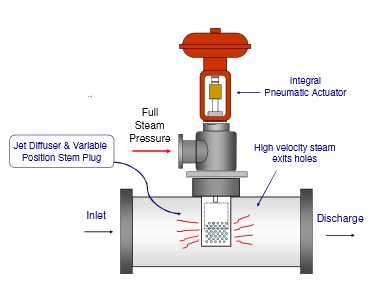
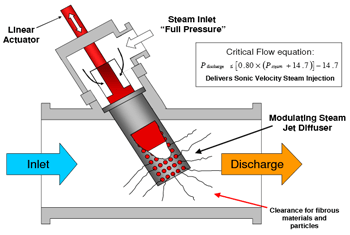
ProSonix’s unique method of steam injection utilises an integral pneumatic actuator and a variable opening steam diffuser to deliver high velocity steam injection heating. We do not throttle or regulate steam pressure. This design offers a precise method of steam control through a choked flow delivery of the steam.
‘Choked flow’ is the phenomenon of accelerating a vapor to maximum velocity by creating a pressure differential through an engineered nozzle. By establishing choked flow, the steam mass flow can be metered to precisely control the heating of the liquid. This produces predictable results based on the position of the stem plug.
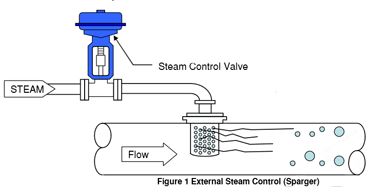
Through a variable-area steam diffuser, steam flow is metered at the point where steam and liquid first contact and mix. This method eliminates the need for an external steam control valve or downstream mechanical mixing devices. High velocity steam flow optimises the steam mixing and condensation with the liquid and eliminates problems with vibration/steam hammering.
Key Direct Steam Injection Benefits
- Precise temperature control +/- 1 °F (-17°C) assures optimal processing conditions
- Self cleaning design eliminates costly maintenance issues from plugging and fouling
- Energy savings as the low pressure drop (typically 1-2 psig) reduces energy pump demand
- High turndown of both steam and water flow rate allow for flexible operating conditions
- Ease of installation as the PSX heater can be installed in the water piping saving valuable floor space
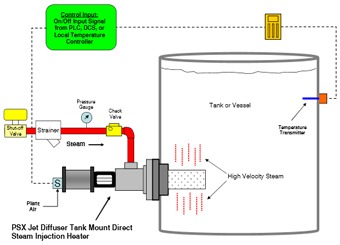 High velocity steam delivery assures complete mixing of steam, reducing occurrences of vibration and saves energy losses from uncondensed steam escaping. Integral stem plug eliminates the need for s
 PSX Jet Cookers use ethanol (ethyl alcohol or grain alcohol) that is produced through a liquefaction process whereby a starch is converted to a sugar, which is then converted to an alcohol product and referred to as ethanol. Ethanol production requires a starch (corn, wheat, rye) based feedstock to supply the conversion process. The grain mash must go through a cook process, to raise the slurry’s temperature. In the Primary Liquefaction Stage, slurry is then pumped through a pressurized jet cooker at 221°F (105°C) and held for 5 minutes. The mixture is then cooled by an atmospheric or vacuum flash condenser. After the flash condensation cooling, the mixture is held for 1–2 hours at 180°F – 190°F (82°C – 88°C) to allow the enzymes time to work.
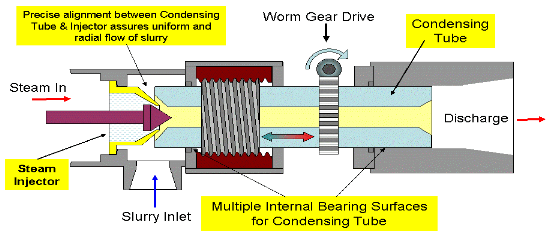 Corn wet milling is the process of separating the corn kernel into starch, protein, germ and fiber in an aqueous medium prior to fermentation. The primary products of wet milling include starch and starch derived products (e.g. high fructose corn syrup and ethanol), corn oil, corn gluten and corn germ. All agricultural crops and residues contain starch, which is a polymer of glucose, a six-carbon sugar. To produce ethanol from grain, the starch portion of the grain is exposed and mixed with water to form a mash. The mash is heated and enzymes are added to convert the starch into glucose.
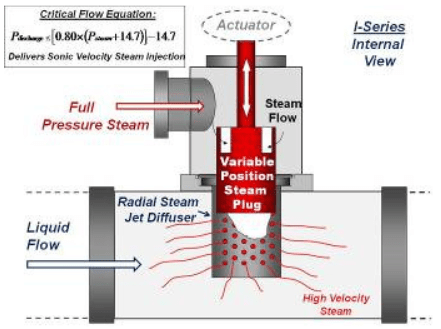
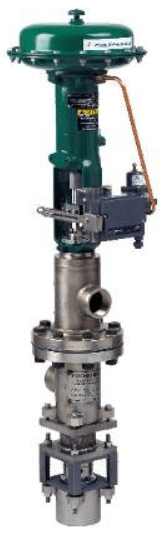 The OptiShear Jet Cooker is designed for starch cooking, wet mill processing of starch, ethanol production, as well as fructose and alcohol production. ProSonix unique method of direct steam injection utilises internal steam modulation via an integral Pneumatic Actuator and variable position steam plug, to accurately meter the mass flow of steam, through choked flow conditions. Choked flow is the phenomenon of accelerating a vapor to maximum velocity by creating a pressure differential through an engineered opening. By establishing choked flow, the steam mass flow can be metered to precisely control the heating of the liquid. This produces predictable results based on the position of the steam plug. Through a variable-area steam diffuser, steam flow is metered at the point where steam and liquid first contact and mix.
 Biomass pretreatment is the initial stage of preparing hemicellulosic materials such as corn stover, grass, straw and wood fiber for ethanol conversion.
 More and more agricultural and dairy farms as well as beef, hog and poultry operations are considering the use of anaerobic digestion for biogas production. These operations typically produce a significant amount of organic matter in the form of manure. Anaerobic digestion is a biological process that breaks down organic solids. Manure can be processed in anaerobic digesters and the byproduct is methane gas. The methane gas can be captured, stored and used to run electrical generators and boilers for use in the farm operations. Heat exchangers can face the following challenges when heating sludge:
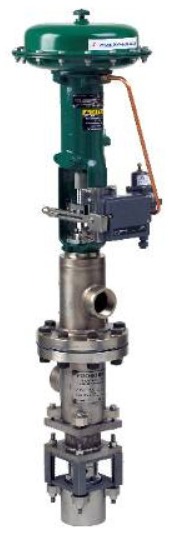 The OptiShear jet cooker is designed for starch cooking, wet mill processing of starch, ethanol production and fructose and alcohol production. ProSonix’s unique method of direct steam injection utilises internal steam modulation via an integral Pneumatic Actuator and variable position steam plug, to accurately meter the mass flow of steam, through choked flow conditions. ‘Choked flow’ is the phenomenon of accelerating a vapor to maximum velocity by creating a pressure differential through an engineered opening. By establishing choked flow, the steam mass flow can be metered to precisely control the heating of the liquid. This produces predictable results based on the position of the steam plug. Through a variable-area steam diffuser, steam flow is metered at the point where steam and liquid first contact and mix.
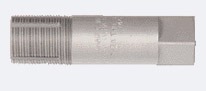 Thread Chasing Tools for heat exchangers are used in conjunction with packing removal tools. Thread chasing tools will remove any leftover packing material in tubesheet hole threads before re-packing is done and are available in the following threads: 7/8-16 (3-5/8 OAL, 5/8 drive square), 7/8-18 (3-5/8 OAL, 5/8 drive square), 1-16 (3-3/4 OAL, 3/4 drive square) and 1-18 (3-3/4 OAL, 3/4 drive square).