
Whitewater Heating
 White water is a fine particle slurry used throughout the paper making process. Its name derives from fine fiber particles in the water that give it a milky white appearance. White water drains from the paper stock into a pit below the paper machine and is used for a variety of uses in the paper making process.
White water systems must periodically be cleaned to remove bacterial build up that occurs over time. This process is known as boil-out, in which the white water is raised to near boiling temperatures of around 180°F – 190°F (82°C – 88°C) to kill any bacteria in the system. A caustic solution is sometimes added to shorten the process and increase the effectiveness. The water is held at temperature until all bacteria is killed.
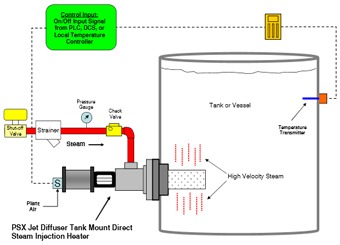
White water systems are typically heated by heating tank contents with steam spargers in the white water chest. Steam Injection Heaters that use a steam pressure reducing valve (PRV) experience a pressure drop in the steam pressure which leads to low velocity steam flow. Low steam velocity leads to poor steam mixing. Externally controlled steam injection heaters may lead to:
- Ineffective condensation of the steam from the spargers, damaging the chest walls leading to expensive repairs
- Steam escaping from the tanks and venting to atmosphere
- Hot and cold zones to be present in the whitewater chest, leading to variable stock temperatures at the paper machine head box
PSX Heater Solution
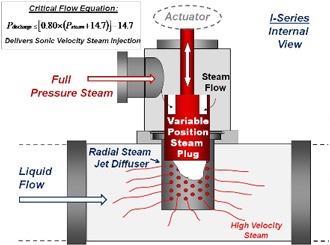
A PSX Jet diffuser heater is installed in the white water system to quickly raise the white water temperature to near boiling and then throttle back to maintain the desired temperature.
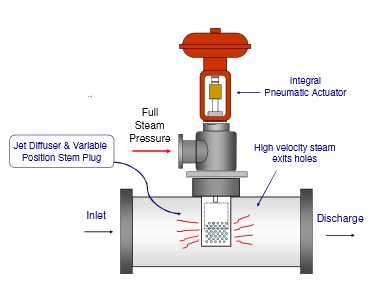
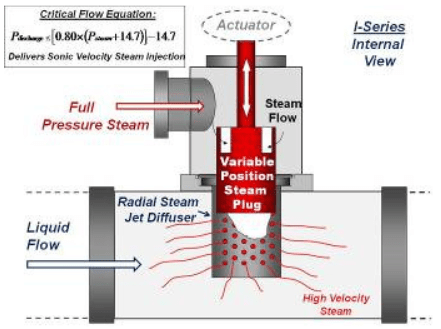
ProSonix unique method of steam injection utilises an internal steam control to precisely deliver the appropriate mass flow of steam for the required heating. This is achieved via and integral Pneumatic Actuator, and a variable position stem plug in the steam jet diffuser. We do not throttle or regulate steam pressure. This design offers a precise method of steam control through a choked flow control delivery of the steam. Choked flow is the phenomenon of accelerating a vapor to maximum velocity by creating a pressure differential through an engineered nozzle. By establishing choked flow, the steam mass flow can be metered to precisely control the heating of the liquid.
Key Direct Steam Injection Benefits
- Energy savings resulting from faster tank time and reduced heat loss to atmosphere
- Lower maintenance due to the PSX heater’s self cleaning design
- Improved safety due to better steam injection heating methods (elimination of steam hammer)
- Reduced operating costs by reducing costly machine down time
- Faster tank heat up time (~ 6-8 times that of traditional sparging) equals less machine downtime

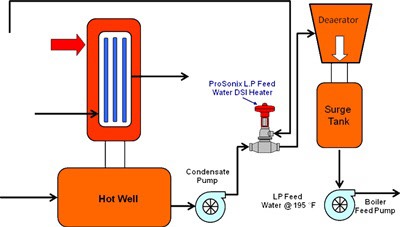

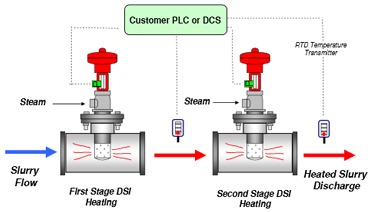 Inline process heating with Direct Steam Injection has multiple applications in a variety of process and utility applications. Many applications such as mineral processing, pulp and fiber slurry pre-treatment, oil sands mining and others are not well suited for traditional methods of heating. Typical challenges encountered are corrosive fluids, abrasive particulate, viscosity changes, plugging and fouling, eating for water, slurry, sludge, and aggressive fluid heating applications. Direct Steam Injection for Inline Heating is a very good choice for a variety of applications. One of the fundamental principals for efficient and reliable steam injection is the ability to produce and deliver high velocity steam. High velocity steam is what assures rapid and complete condensation and mixing of the steam in the fluid.
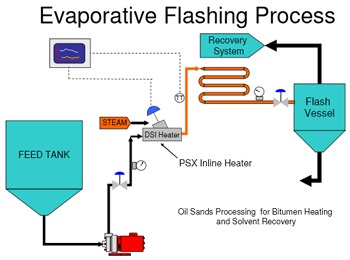 Oil sands processing in Northern Canada utilises a variety of solvents and naphtha to assist in the separation of the Bitumen from the water and sand. These fluids can help promote chemical reactions, accelerate processing time and reduce processing costs. Many of these
 In the Food industry, blanching of vegetables and potatoes is a common practice. Enzymes in vegetables are inactivated by the blanching process. Blanching is the exposure of the vegetables to boiling water or steam for a brief period of time. The vegetable must then be rapidly cooled in ice water to prevent it from cooking. There are a number of applications where containers need to be cleaned and pauperised prior to being filled in the packaging process. Processes such as fruit and vegetable juice processors, potato processors, vegetable and fruit canning and so forth are all processes that require hot water supply for cleaning and washing of packages and containers prior to filling.
 PSX Jet Cookers use ethanol (ethyl alcohol or grain alcohol) that is produced through a liquefaction process whereby a starch is converted to a sugar, which is then converted to an alcohol product and referred to as ethanol. Ethanol production requires a starch (corn, wheat, rye) based feedstock to supply the conversion process. The grain mash must go through a cook process, to raise the slurry’s temperature. In the Primary Liquefaction Stage, slurry is then pumped through a pressurized jet cooker at 221°F (105°C) and held for 5 minutes. The mixture is then cooled by an atmospheric or vacuum flash condenser. After the flash condensation cooling, the mixture is held for 1–2 hours at 180°F – 190°F (82°C – 88°C) to allow the enzymes time to work.