
Boiler Feedwater Heating
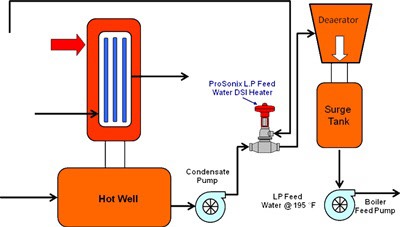
Boiler Feedwater Heaters via Direct Steam Injection
Power generating plants utilise steam boilers to produce electricity energy for their operation. These boilers often have feedwater heaters which are an integral part of the plant’s thermodynamic cycle. The presence of the heaters in the cycle improves the thermal efficiency of the power plant by lowering the amount of thermal energy required to generate a given amount of electrical by re-using produced steam in a heat exchanger to heat feedwater prior to the Deaerator.
Issues Associated with Boiler Feedwater Heating
- Heat exchangers are prone to mineral and scale build-up on the internal components. This scale build-up reduces their thermal efficiency and requires costly cleaning and replacement of damaged components
- Mineral and scale build-up can lead to a plugging/fouling issue which increases energy consumption from the condensate pumps
- Replacement of the heat exchangers requires considerable floor space and foundation improvement because of their size, weight and cleaning access requirements
ProSonix Direct Steam Injection Heater Solution
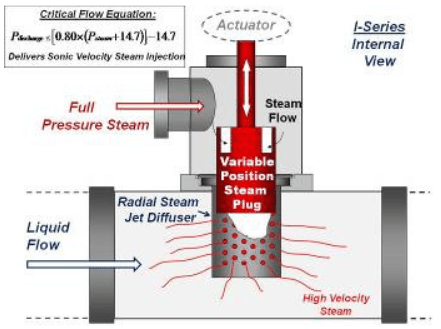
The PSX heater can be installed to heat up the returned condensate with low pressure steam from the turbine. Often times steam temperatures of 600°F (316°C) and feedwater temps of 400°F (204°C) are not uncommon. The key to efficient, safe and predictable steam injection is the use of internally modulated steam control and to inject steam at sonic velocity to achieve choked flow. By achieving choked flow, sonic velocity conditions can be achieved for steam injection. The use of an integral pneumatic actuator allows for sonic velocity steam injection for the PSX Heater to operate in a choked flow manner for good, non-violent mixing. The PSX heater is an internally modulated heater, with a variable position stem plug, that varies the mass flow rate of steam by changing the area in which the steam may pass. This type of modulation allows the full steam pressure to always be present at the point of injection, regardless of plug position.
Key PSX Heater Direct Steam Injection Benefits
- Stable operation the internally modulated steam control design of the PSX heater controls the steam mass flow and not the steam pressure, thus eliminating steam hammer and vibration issues
- Lower maintenance due to the PSX heater’s self cleaning design (no scaling or plugging/fouling)
- Low pressure drop across the PSX Heater (typically 1-2 psig) reduce pump integration issues and flow disruptions
- Economical installation as the PSX heater can be installed in the piping with no floor space requirements
- Precise temperature control, typically +/- 1°F (-17°C), allows for a more reliable heating process
- High turndown on both steam and liquid allow for process flexibility and process condition variations

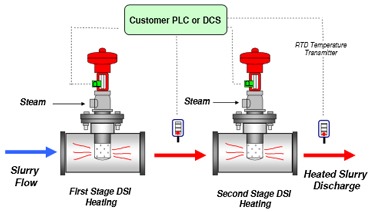 Inline process heating with Direct Steam Injection has multiple applications in a variety of process and utility applications. Many applications such as mineral processing, pulp and fiber slurry pre-treatment, oil sands mining and others are not well suited for traditional methods of heating. Typical challenges encountered are corrosive fluids, abrasive particulate, viscosity changes, plugging and fouling, eating for water, slurry, sludge, and aggressive fluid heating applications. Direct Steam Injection for Inline Heating is a very good choice for a variety of applications. One of the fundamental principals for efficient and reliable steam injection is the ability to produce and deliver high velocity steam. High velocity steam is what assures rapid and complete condensation and mixing of the steam in the fluid.
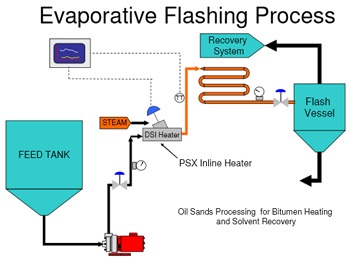 Oil sands processing in Northern Canada utilises a variety of solvents and naphtha to assist in the separation of the Bitumen from the water and sand. These fluids can help promote chemical reactions, accelerate processing time and reduce processing costs. Many of these
  In the Food industry, blanching of vegetables and potatoes is a common practice. Enzymes in vegetables are inactivated by the blanching process. Blanching is the exposure of the vegetables to boiling water or steam for a brief period of time. The vegetable must then be rapidly cooled in ice water to prevent it from cooking. There are a number of applications where containers need to be cleaned and pauperised prior to being filled in the packaging process. Processes such as fruit and vegetable juice processors, potato processors, vegetable and fruit canning and so forth are all processes that require hot water supply for cleaning and washing of packages and containers prior to filling.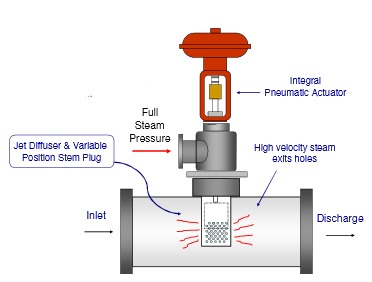
 PSX Jet Cookers use ethanol (ethyl alcohol or grain alcohol) that is produced through a liquefaction process whereby a starch is converted to a sugar, which is then converted to an alcohol product and referred to as ethanol. Ethanol production requires a starch (corn, wheat, rye) based feedstock to supply the conversion process. The grain mash must go through a cook process, to raise the slurry’s temperature. In the Primary Liquefaction Stage, slurry is then pumped through a pressurized jet cooker at 221°F (105°C) and held for 5 minutes. The mixture is then cooled by an atmospheric or vacuum flash condenser. After the flash condensation cooling, the mixture is held for 1–2 hours at 180°F – 190°F (82°C – 88°C) to allow the enzymes time to work.
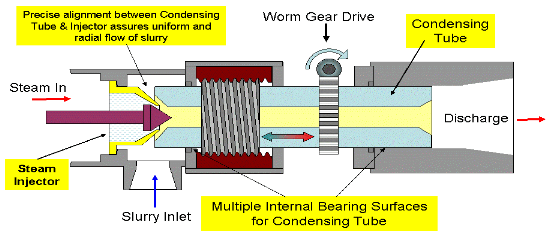 Corn wet milling is the process of separating the corn kernel into starch, protein, germ and fiber in an aqueous medium prior to fermentation. The primary products of wet milling include starch and starch derived products (e.g. high fructose corn syrup and ethanol), corn oil, corn gluten and corn germ. All agricultural crops and residues contain starch, which is a polymer of glucose, a six-carbon sugar. To produce ethanol from grain, the starch portion of the grain is exposed and mixed with water to form a mash. The mash is heated and enzymes are added to convert the starch into glucose.
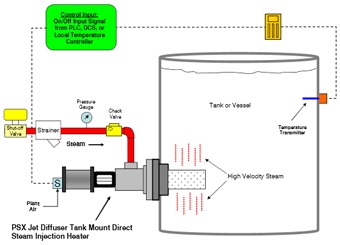
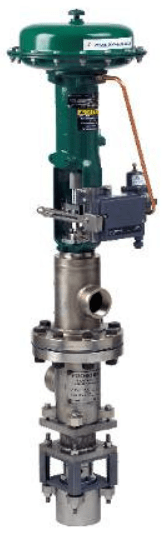 The OptiShear Jet Cooker is designed for starch cooking, wet mill processing of starch, ethanol production, as well as fructose and alcohol production. ProSonix unique method of direct steam injection utilises internal steam modulation via an integral Pneumatic Actuator and variable position steam plug, to accurately meter the mass flow of steam, through choked flow conditions. Choked flow is the phenomenon of accelerating a vapor to maximum velocity by creating a pressure differential through an engineered opening. By establishing choked flow, the steam mass flow can be metered to precisely control the heating of the liquid. This produces predictable results based on the position of the steam plug. Through a variable-area steam diffuser, steam flow is metered at the point where steam and liquid first contact and mix.